Easy Sleep Hygiene Tips: 3 Tiny Changes for Big Results
Introduction
You’ve tried everything. Counted sheep, downloaded meditation apps, sworn off your phone an hour before bed—yet sleep still feels impossible. Here’s the reality: over one-third of American adults aren’t getting the seven hours of sleep they need, according to the Sleep Foundation, and the consequences reach far beyond feeling foggy. Poor sleep hygiene quietly chips away at your health, raising risks for heart disease, diabetes, and even affecting your ability to think clearly throughout the day.
Good news? Better sleep hygiene doesn’t require a complete life overhaul. We’re talking three tiny, actionable changes that work with your body instead of against it: a consistent sleep routine, a bedroom built for rest, and smarter eating habits. No expensive gadgets. They’re foundational shifts that transform how you sleep, starting tonight.

Struggling with Sleep? Get Your Personalized Plan
Sleep Hygiene Tip #1: Build a Consistent Sleep Schedule
Your internal 24-hour clock—the circadian rhythm—needs consistency. Sleeping at 11 PM one night and 2 AM the next sends mixed signals to your body. The fix? Sleep regularity may be a stronger predictor of mortality risk than sleep duration itself (Sleep Foundation). Research tracking 60,000+ adults found that consistent sleepers had a 30% lower mortality risk—even when sleeping just six hours regularly, versus eight hours irregularly.
Why Consistent Schedule Matters
| Consistent Sleep Schedule | Irregular Sleep Pattern |
|---|---|
| Fall asleep faster naturally. | Struggle to fall asleep. |
| Wake without alarms, no grogginess. | Need multiple alarms, feel foggy |
| Stable mood and energy. | Increased anxiety, fatigue. |
| Stronger immune function. | Higher illness risk. |
How to Start Sleep Hygiene With a Consistent Routine
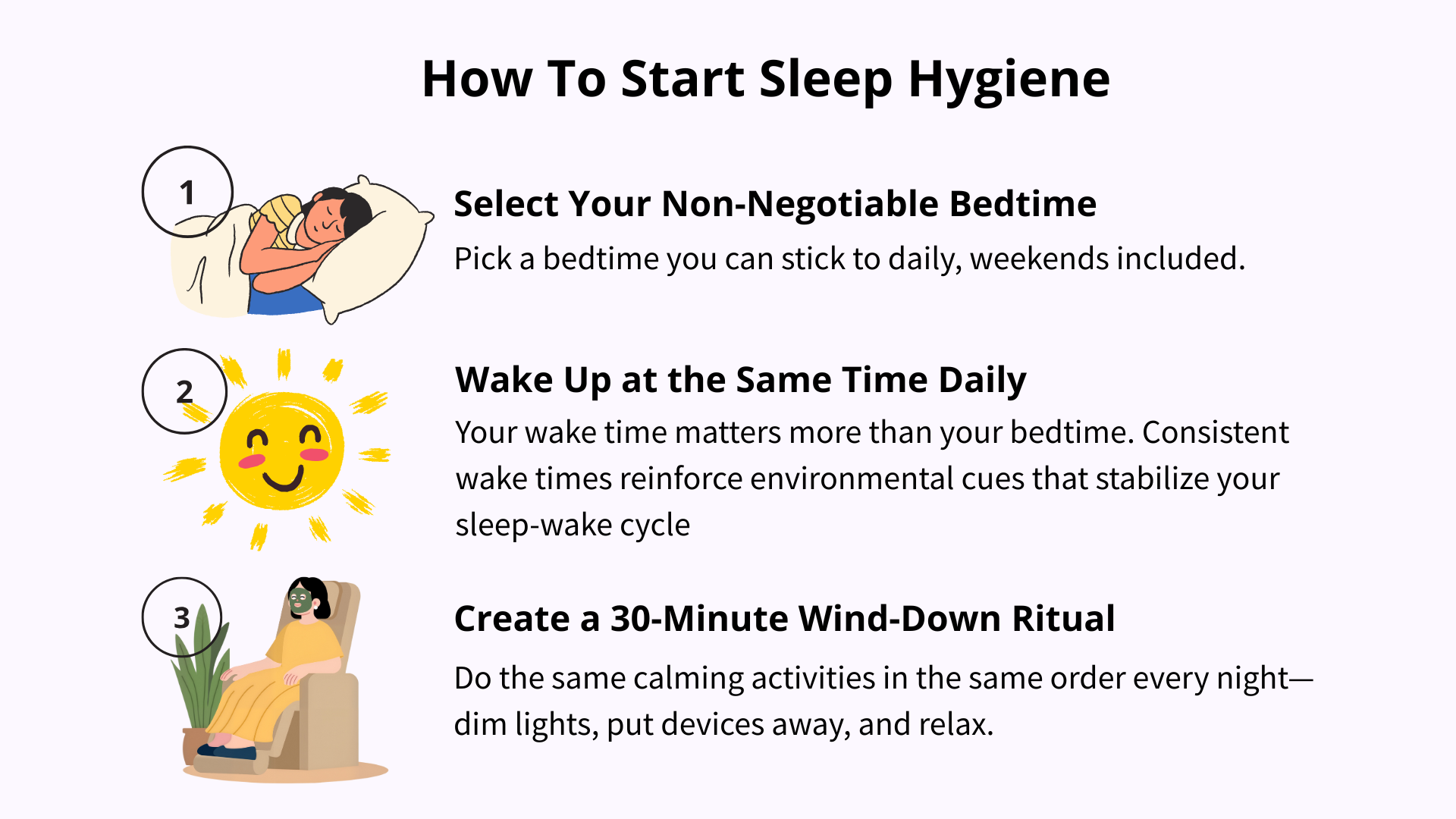
Step 1: Pick Your Non-Negotiable Times
- Pick a bedtime and wake time you can stick to daily, weekends included.
- Most adults need 7-9 hours, so work backward from your wake time
- Example: If you must wake at 6:30 AM, aim for 10:30 PM-11:00 PM bedtime
Step 2: Anchor Your Mornings First:
Your wake time matters more than your bedtime. Consistent wake times reinforce environmental cues that stabilize your sleep-wake cycle (CDC)
- Set one alarm and resist the snooze button
- Expose yourself to sunlight within 30 minutes of waking—just 5-10 minutes works.
- Keep your breakfast timing consistent each day.
Step 3: Create a 30-Minute Wind-Down Window:
Think of this as your body’s “closing time” signal:
- Lower the lights in your home.
- Move devices out of your bedroom (blue light interferes with melatonin).
- Try calming activities: reading, gentle stretching, meditation
- Keep the routine identical each night
What About Weekends?
You don’t need to be rigid, but try limiting variations to 1-2 hours maximum. If you’ve been sleep-deprived during the week, extending sleep by up to 1-2 hours on non-work days can actually be beneficial, according to the Sleep Health Foundation, rather than harmful—your body needs to recover.
Timeline for Results
- Days 1-3: Adjustment period (feels difficult)
- Days 4-7: Falling asleep becomes easier
- Weeks 2-3: Wake naturally, feel refreshed.
- Week 4+: Consistent energy, sharper focus, better mood
Ready to Take Control of Your Sleep?
Sleep Hygiene Tip #2: Transform Your Bedroom Into a Sleep Sanctuary
Our bedroom should mimic a cave: cool, dark, and silent. Research shows sleep was most efficient when nighttime temperature ranged between 20-25°C (68-77°F), with a 5-10% drop in sleep efficiency when temperatures exceeded 25°C (CDC). How you set up your bedroom determines both how quickly you fall asleep and your sleep depth.
3 Essential Elements for Better Sleep
| Factor | Why It Matters | Quick Fix |
|---|---|---|
| Temperature | Body temperature drops naturally before sleep; cool rooms support this process. | Set thermostat to 60-67°F (15-19°C) |
| Darkness | Pre-bedtime light exposure blocked melatonin release in 99% of people and reduced melatonin duration by 90 minutes. | Blackout curtains + remove all light sources. |
| Noise Control | Sudden sounds trigger stress responses and fragment sleep. | A White noise machine or earplugs |
How to Make Your Bedroom Better for Sleep
1. Temperature Control
- Lower your thermostat 2 hours before bed – Your core body temperature begins to cool two hours before sleep, signaling it’s time to rest (Medbox)
- Choose cotton or linen sheets for better airflow.
- Run a fan to circulate air.
- Use multiple light blankets rather than one thick comforter.
2. Light Elimination
Darkness triggers melatonin production—the hormone that makes you sleepy. Even small amounts disrupt this:
❌ Remove these light sources:
✅ Create complete darkness:
3. Noise Management
- Try a white noise machine to block out unexpected noises
- Try silicone earplugs (comfortable for side sleepers)
- Install weather stripping on doors to block hallway noise
- Position your bed away from shared walls when you can..
4. Additional Improvements Worth Making
- Your Mattress & Pillows: Change your mattress every 7-10 years and pillows every 1-2 years.
- Bedroom Air Quality:
- Keep humidity between 30-50%
- Open windows for fresh air when possible
- Remove clutter (dust collectors interfere with breathing)
Reserve Your Bed for Sleep Only:
Screen time stimulates your mind and disrupts circadian timing and melatonin production. No working, eating, or scrolling in bed—train your brain that bed = sleep only.
Sleep Hygiene Tip #3: Smart Eating and Drinking for Better Sleep
Your food choices and meal timing affect how well you sleep. A 400mg dose of caffeine taken as early as 12 hours before bed disrupts sleep (CDC), while eating within 2-4 hours of bedtime affects digestion and sleep quality, (PubMed Central). Your evening food choices matter more than you think.
The 3 Biggest Sleep Disruptors
| What You Consume | How It Ruins Sleep | Cut-Off Time |
|---|---|---|
| Caffeine (coffee, tea, energy drinks) | Reduces total sleep by 45 minutes, cuts deep sleep by 11 minutes | 8-10 hours before bed. |
| Alcohol (wine, beer, cocktails) | Delays REM sleep onset, reduces REM duration—even at low doses | 3-4 hours before bed. |
| Heavy/Large Meals | Eating within 3 hours of bed increases nocturnal awakenings by 61% | 2-3 hours before bed. |
Why Timing Matters: Caffeine, Alcohol, and Meals
1. Caffeine: The Hidden Sleep Thief
That afternoon coffee feels harmless, but caffeine consumed 12 hours before bedtime negatively impacts sleep, with effects worsening the closer to bedtime. Most people can’t detect these disruptions—you think you slept fine, but your brain never got proper rest.
Practical caffeine rules:
- Last coffee/tea by 2 PM (for 10 PM bedtime)
- One coffee cup contains 100mg caffeine (okay up to 4 hours before sleep)
- Four cups = 400mg (disrupts sleep even 12 hours later)
- Check labels: energy drinks, sodas, and chocolate all contain caffeine
2. Alcohol: The False Friend
Alcohol makes you fall asleep faster initially, but disrupts REM sleep and causes frequent awakenings in the second half of the night, according to the Sleep Foundation. You might sleep 8 hours but wake feeling unrested because your brain never completed proper sleep cycles.
For alcohol:
- Quit 3-4 hours before sleep, cap at 1-2 drinks.
- Limit to 1-2 drinks maximum
- Never use alcohol as a sleep aid—it creates a vicious cycle
3. Meal Timing: Your Body’s Bedtime Struggle
Heavy meals near bedtime cause discomfort and acid reflux as stomach contents press against the esophageal sphincter when lying down (PubMed Central). Your digestive system needs 2-3 hours to process food before you sleep.
Foods That Sabotage Sleep
❌ Avoid These Before Bed:
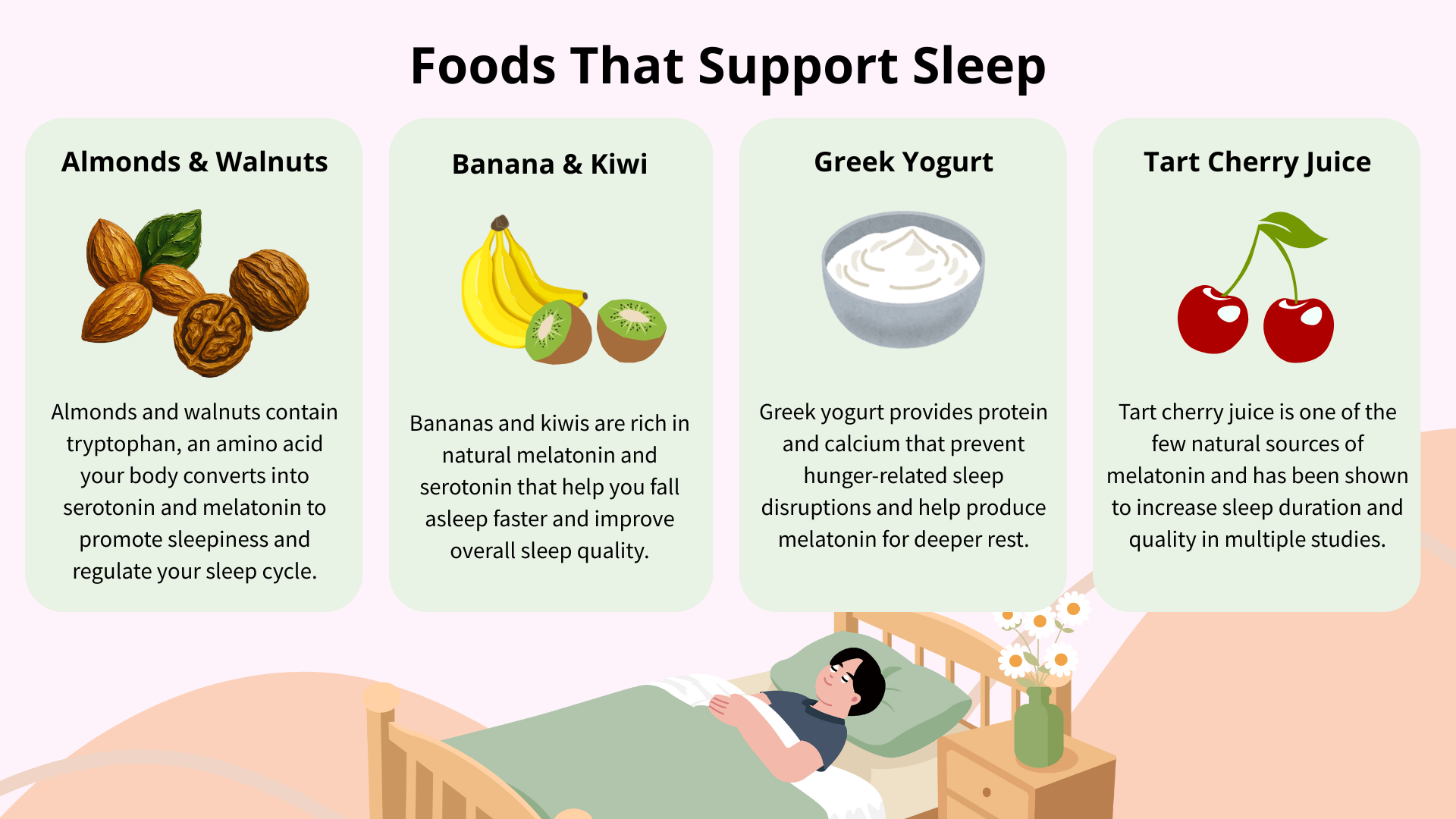
✅ Foods That Support Sleep Hygiene